
How to Choose the Right Multifunction Meter for an Industrial Electrical Panel
Choosing the right multifunction meter for an industrial electrical panel is not simply about finding a device that displays voltage and current.
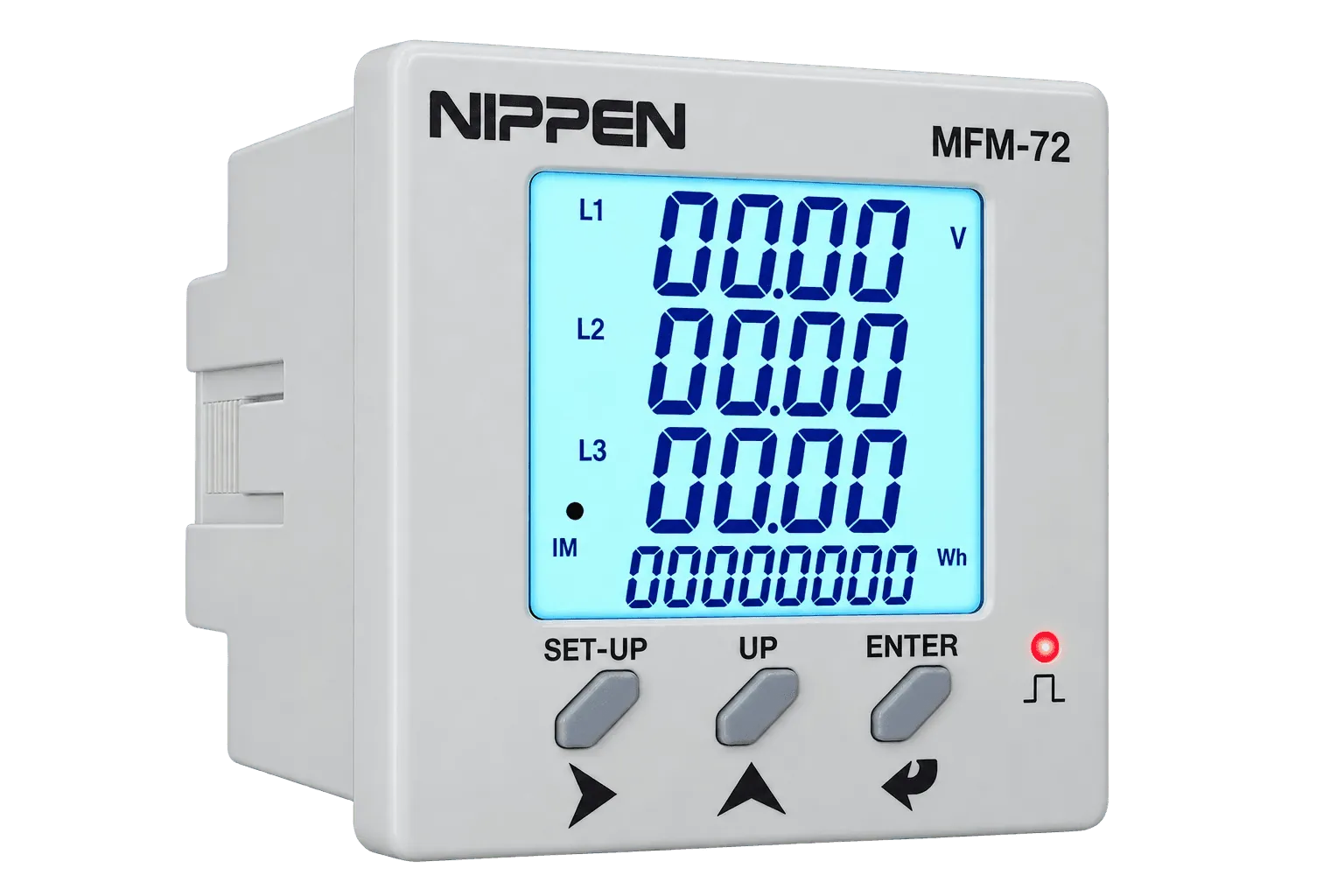
In an industrial environment, electrical parameters need to be monitored clearly and consistently. The right meter can help panel builders, maintenance teams and electrical engineers keep track of important parameters such as voltage, current, power and energy from a single device.
But with different meters offering different features, how do you know which one is right for your panel?
Here are some important factors to consider.
1. Start With the Parameters You Need to Measure
The first question should be simple:
What do you actually need to monitor?
A basic application may only require voltage and current measurement. More demanding industrial panels may require additional parameters such as:
- Active power
- Reactive power
- Apparent power
- Active energy
- Apparent energy
- Power factor
- Frequency
- Three-phase voltage and current
A multifunction meter becomes particularly useful when several of these parameters need to be monitored from the same panel.
For example, the Nippen DT108 Multifunction Meter is designed for three-phase measurement and supports True RMS measurement of voltage and current, along with active, reactive and apparent power and energy measurements.
2. Check Whether You Need Single-Phase or Three-Phase Measurement
Industrial electrical panels commonly involve three-phase systems, so selecting a meter that matches the electrical system is important.
Before purchasing a meter, check:
- Number of phases
- Voltage system
- Current measurement requirements
- CT requirements
- PT requirements, if applicable
For a three-phase industrial panel, a three-phase multifunction meter can provide a more complete picture of the electrical system rather than relying on multiple individual meters.
3. Look at the CT and PT Compatibility
Current transformers (CTs) and potential transformers (PTs) are commonly used when direct measurement is not suitable for the electrical system.
This makes CT/PT programmability an important feature to consider.
The Nippen DT108 supports programmable CT/PT settings for primary and secondary values. This allows the meter to be configured according to the measurement arrangement of the panel.
When selecting a meter, always make sure its input and transformer configuration are compatible with your application.
4. Consider How Easy the Readings Are to Understand
A meter may have plenty of features, but if the readings are difficult to view or navigate, it can become inconvenient during routine operation and maintenance.
Consider:
- Display visibility
- Parameter selection
- Ease of configuration
- Availability of the information you actually need
- Whether operators can understand the readings quickly
For industrial panels, practical usability matters just as much as the number of parameters a meter can measure.
5. Think Beyond Voltage and Current
One of the main advantages of a multifunction meter is that several electrical parameters can be monitored through one device.
For example, the DT108 provides measurement of:
Voltage + Current + Active Power + Reactive Power + Apparent Power + Energy
This can make the meter useful for applications where electrical monitoring involves more than simply checking voltage and current.
Instead of installing separate meters for different parameters, a multifunction meter can consolidate measurement into a single panel instrument.
6. Check Additional Features That Match Your Application
Different industrial applications have different monitoring requirements.
Some installations may benefit from additional functions such as run-hour monitoring or auxiliary inputs/interrupts.
The DT108 includes run-hour auxiliary interrupts, along with programmable CT/PT settings.
The important point is not to choose a meter simply because it has more features. Choose the features that are relevant to your panel and application.
7. Consider the Complete Application, Not Just the Meter
Before finalizing your multifunction meter, look at the complete panel application.
Ask yourself:
- What parameters need to be monitored?
- Is the system single-phase or three-phase?
- What are the CT/PT ratios?
- How frequently will the readings be checked?
- Who will operate or maintain the panel?
- Are additional monitoring functions required?
- Does the meter provide the measurements needed without unnecessary complexity?
Answering these questions first makes it easier to select the right meter.
Why a Multifunction Meter Can Be a Practical Choice
Industrial electrical panels often require monitoring of several electrical parameters. Using separate instruments for every measurement can increase the number of devices required on the panel.
A multifunction meter brings multiple measurements together in one instrument.
For applications requiring three-phase True RMS voltage and current measurement, power and energy monitoring, and programmable CT/PT settings, a multifunction meter such as the Nippen DT108 can provide a practical solution.
The goal is not simply to install a meter with the maximum number of features. The goal is to choose a meter that matches the electrical system and provides the information required for the application.
Final Checklist Before Selecting a Multifunction Meter
Before making your selection, check these five things:
- Measurement parameters – Voltage, current, power, energy and other required values
- Electrical system – Single-phase or three-phase
- CT/PT requirements – Make sure the meter supports your transformer configuration
- Display and usability – Readings should be easy to access and understand
- Additional functions – Select features that are actually useful for your application
Choosing the Right Meter Starts With the Right Questions
There is no single multifunction meter that is perfect for every industrial panel.
The right choice depends on the electrical system, measurement requirements and application.
By understanding what you need to measure before selecting the instrument, you can choose a multifunction meter that provides the right information without adding unnecessary complexity to your panel.
Looking for a multifunction meter for your industrial application?
Explore Nippen’s range of electrical measurement and control products or contact our team to discuss your requirement.